

Learn to Lead Climb Course
A comprehensive course that covers all of the technique to lead climb and lead belay safely, a must-have climbing skill for climbers who want to progress to outdoor and advanced climbing.
Duration
6 hours (4 x 1.5-hour sessions)
Price
€40 per session (€160 total per person)
Min. participants
2 – Contact us if you have no partner
Level
Intermediate
Prerequisites
To book this course you must have at least 6 months belaying experience using an ATC belay device on top-rope, while also climbing at f5c or above. Not quite there yet? Check out our New to Climbing courses to learn how to top-rope belay or our day pass & membership prices and come practice before making the leap to lead climbing.
Course Content
You will develop a complete understanding of what it means to lead climb and belay: from how to efficiently clip to how to safely fall or catch a falling lead climber as a belayer.
Clipping Technique
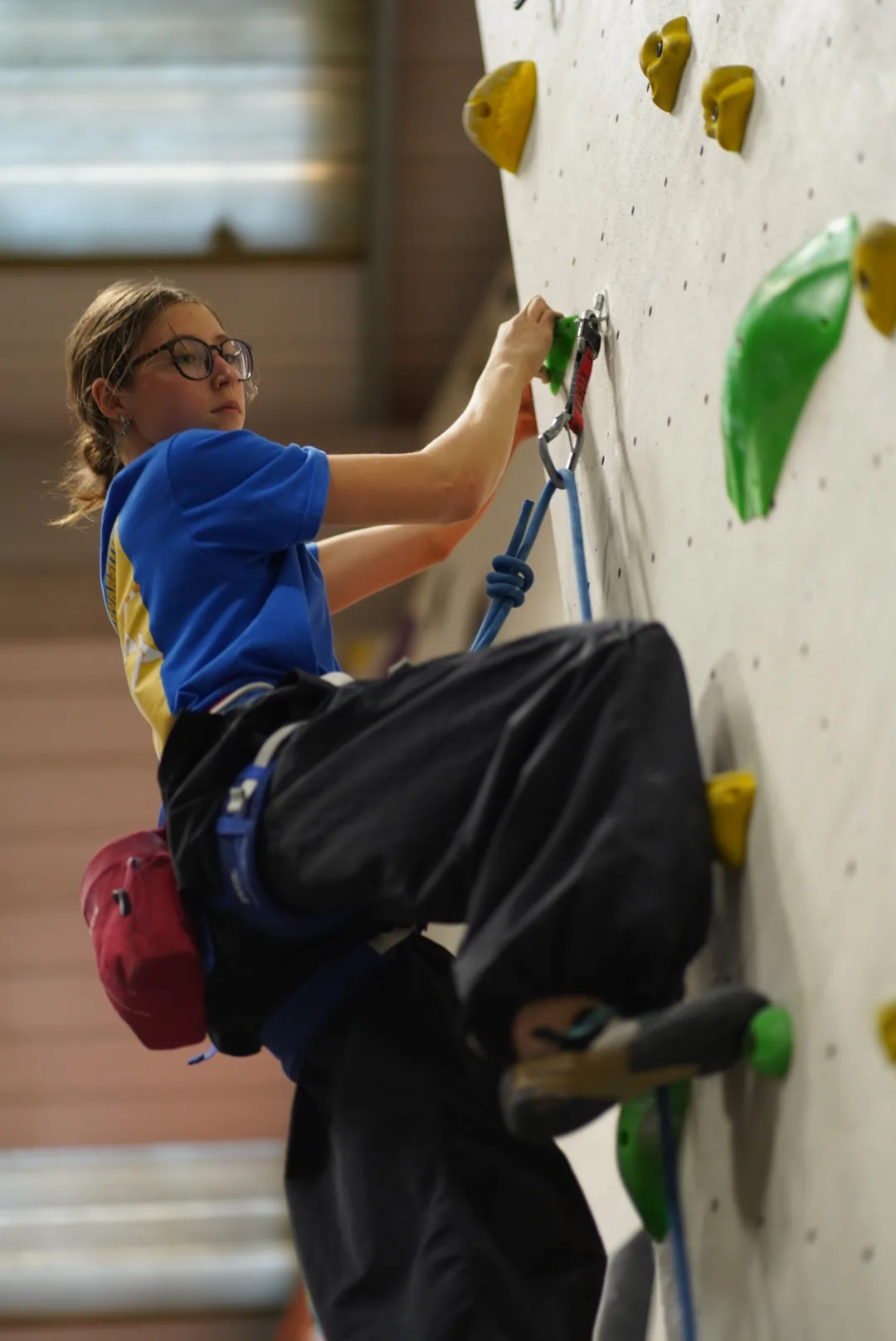
Learn to clip quickdraws efficiently with either hand and how to conserve energy while clipping. Good clipping technique is one of the most important skills a lead climber can develop.
Rope Management
Understand how to manage rope drag, how to read a route before you climb, and how the flow of rope between you and your belayer affects your safety and movement on the wall.
Lead-Specific Safety
Master the essential safety checks unique to lead climbing: avoiding back-clips, Z-clips, and other clipping errors that can turn a standard fall into a dangerous one.
Falling Safely
Lead falls are a fact of life. Learning to fall well makes you a calmer, stronger climber. You will practice controlled falls and build the confidence to push yourself on harder routes.
Lead Belaying
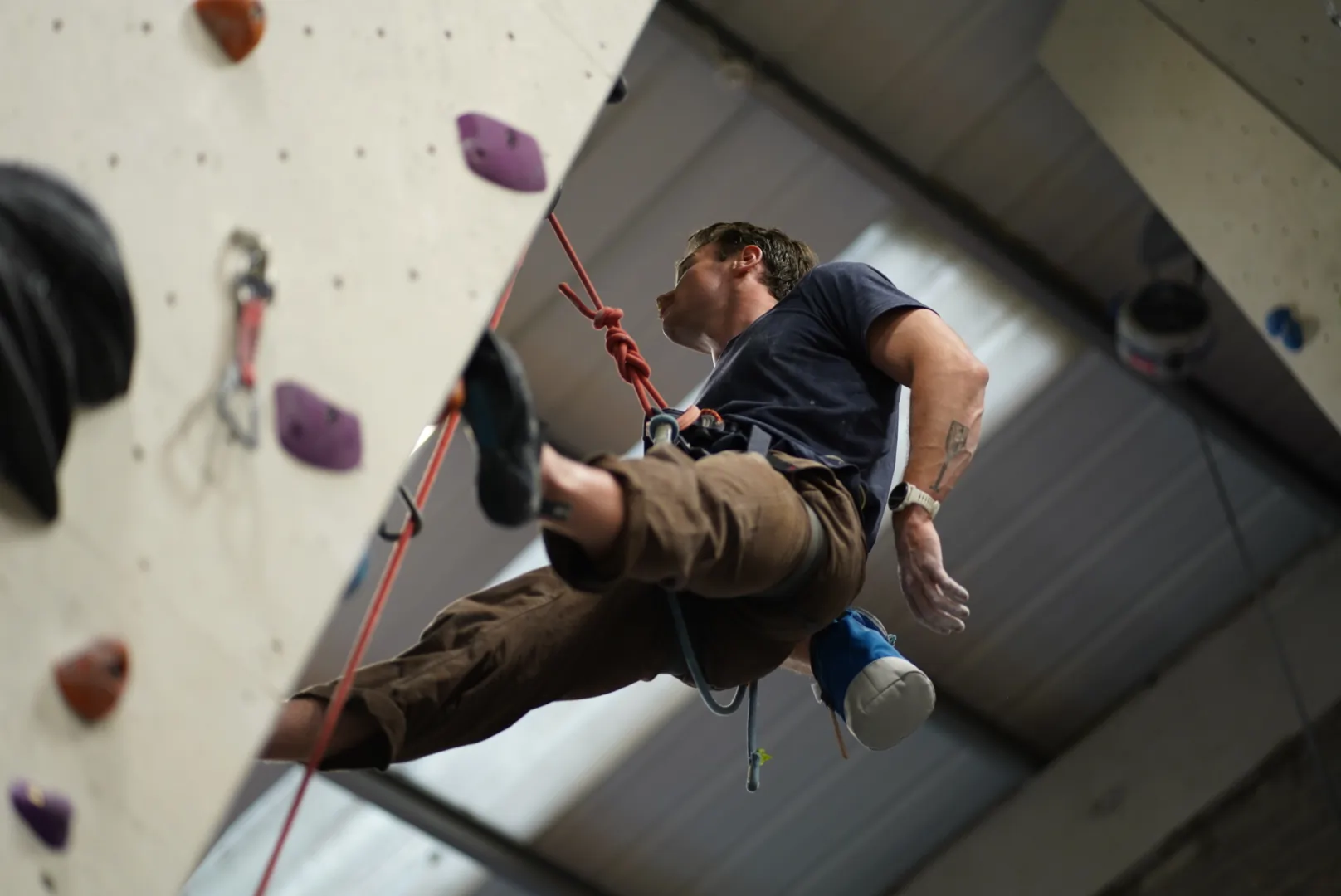
Lead belaying is different to top-rope belaying. You will learn to read your climber, manage slack correctly, and give a safe, dynamic catch that protects the leader at every point on the route.
Lowering & Anchors
Understand how to lower off correctly from both draw and anchor stations, and the clear communication between leader and belayer that makes this process smooth and safe every time.
The Grade Requirement Explained
The f5c minimum exists because lead climbing is harder than top-roping the same route, and being underprepared can create safety risks.
Lead climbing is physically harder
When you lead, you must stop mid-route to clip each bolt while holding on with one hand, pulling up slack and making a precise movement, often while already pumped. If you are near your physical limit before you even start clipping, that extra demand can push you into a failed clip and/or fall.
Think of it this way: leading effectively adds about a grade’s worth of effort compared to top-roping the same route. Being solid at f5c ensures you can get sufficient lead practice on some of our easier routes and can safely and correctly clip while still having some petrol left in the tank.
The importance of clipping correctly
A tired or rushed climber is far more likely to make a clipping error. Two of the most common and most dangerous are:
The rope runs through the quickdraw in the wrong direction. In a fall, this can cause the rope to unclip the draw entirely.
You accidentally clip the rope below your last bolt into the next bolt up. The resulting Z-shape restricts the rope and makes any fall longer and harder.
Both errors are easy to avoid but can be overlooked when climbing at your physical limit, hence our minimum grade requirement.
A Gateway to Outdoor Sport Climbing
Although sport climbing is more popular on the continent than in Ireland, the fundamentals that this course teaches you are directly transferable: read the route, clip efficiently, check your orientation.
While the gear may look a little different outdoors and there are additional safety procedures, the core skills are identical. Learning to lead at Dublin Climbing Centre is a first step towards a lifetime of climbing outside.
Common Questions
Do I need my own gear for the course?
No. All equipment including harness, shoes, and belay device is included. However, climbers at this level often have their own gear and are welcome to use that during the course.
How do I know if I’m at the right level?
You should be able to climb f5c routes on top rope comfortably and consistently, meaning you can complete them without falling and without feeling at your absolute limit. If you are unsure, come in for a climb and a chat with our staff for more information.
Can I practice clipping before I book?
Yes, and we actively encourage it. Ask at reception about our rope tails, which let you practice the clipping motion on the ground or while top-roping. They are free to use and one of the best ways to prepare for the course.
Will this course let me lead climb outdoors?
This course gives you the fundamental skills of clipping, rope management, safe falling, and lead belaying that are directly transferable to outdoor sport climbing. However, we still recommend gaining lead climbing and lead belaying experience indoors before taking your skills outdoors, and enrolling in an outdoor climbing course to learn additional outdoor safety procedures like setting up an anchor or identifying loose rock and bolts.
What’s the difference between lead belaying and top-rope belaying?
On a top rope, the rope is always running through an anchor above the climber, so slack is never really an issue. Lead belaying requires you to actively feed rope out as the climber moves up and clips, then be ready to take a dynamic or static catch if they fall. It is a more active, demanding skill and is covered in full on this course.
Learn to Lead Climb
Ready to progress from top rope? Our Learn to Lead course teaches you everything you need to lead climb safely and confidently inside our centre and beyond.